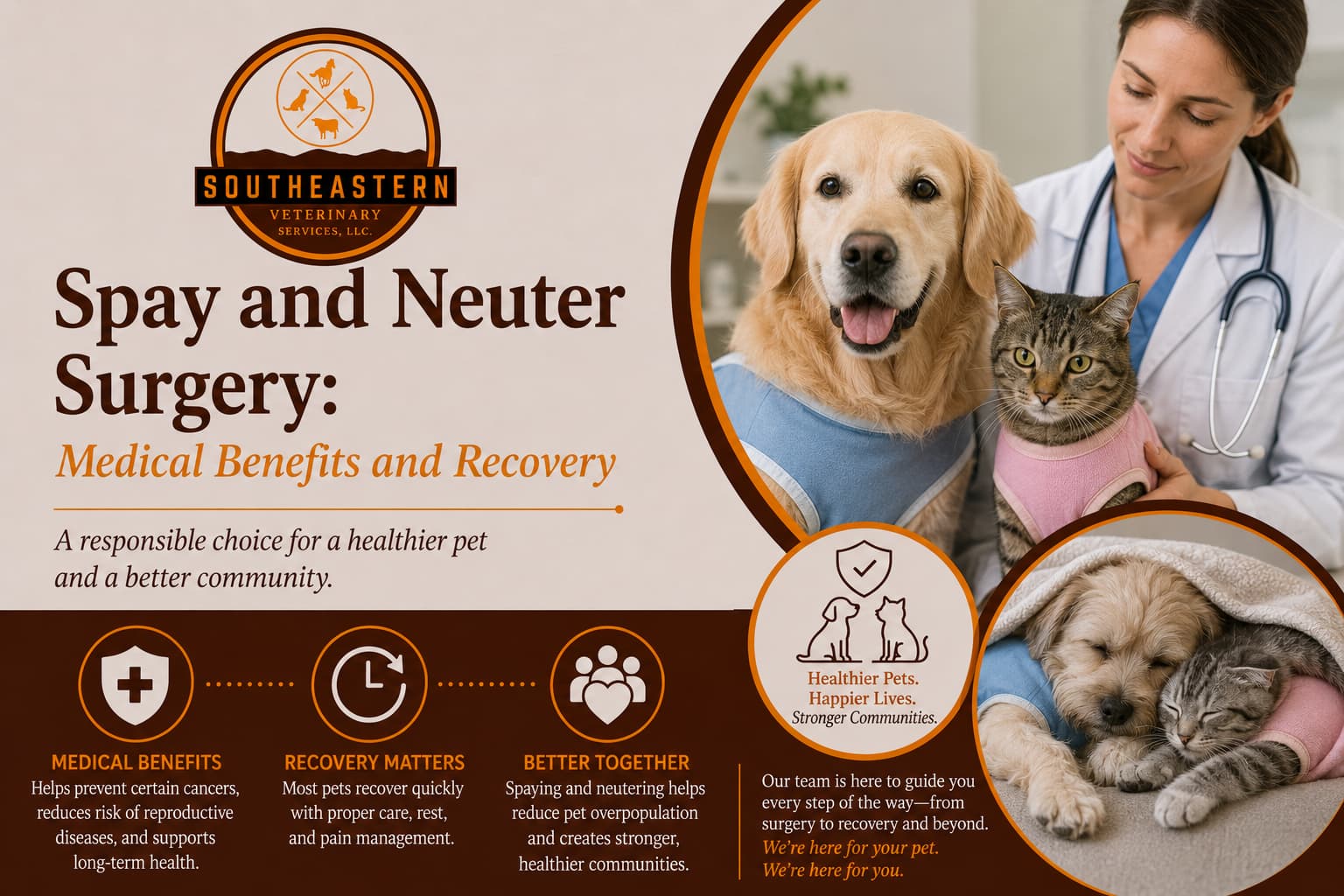
Spay and neuter surgery is one of the most common preventive procedures recommended for dogs and cats. For many pet owners, the decision is connected to preventing unwanted litters, but the benefits often go beyond population control. These procedures can also support long-term health, reduce certain medical risks, and help families make responsible decisions for their pets.
At Southeastern Veterinary Services in Cleveland, TN, spay and neuter care is tailored to each pet’s age, breed, size, health history, and lifestyle. While these are routine procedures, they are still surgeries that require proper planning, veterinary guidance, and careful recovery at home.
What Is the Difference Between Spaying and Neutering?
Spaying refers to the surgical sterilization of a female pet. During this procedure, the reproductive organs are removed so the pet can no longer become pregnant or go through heat cycles.
Neutering generally refers to the surgical sterilization of a male pet. During this procedure, the testicles are removed, preventing the pet from reproducing.
Both procedures are performed under general anesthesia. Your veterinary team will monitor your pet before, during, and after surgery to help keep the procedure as safe and comfortable as possible.
Medical Benefits of Spaying Female Pets
Spaying can provide several important health benefits for female dogs and cats. One of the most significant is the prevention of pyometra, a serious and potentially life-threatening infection of the uterus. Pyometra often requires emergency treatment and can become dangerous quickly if not addressed.
Spaying also removes the risk of ovarian and uterine cancers because those reproductive organs are removed during the procedure. In many pets, spaying may also reduce the risk of mammary tumors, especially when performed before repeated heat cycles.
Another benefit is the elimination of heat cycles. Female pets in heat may show behavior changes, attract males, vocalize more often, attempt to escape, or leave discharge in the home. Spaying helps prevent these cycle-related concerns and can make daily care more manageable for families.
Medical Benefits of Neutering Male Pets
Neutering male pets also offers health and management benefits. Since the testicles are removed during neutering, the risk of testicular cancer is eliminated. It may also reduce the risk of certain prostate-related problems later in life.
For some male pets, neutering may help reduce behaviors associated with mating instincts, such as roaming, mounting, and urine marking. This is not guaranteed to solve every behavior issue, but it can be helpful when those behaviors are hormone-related.
Roaming can put pets at risk of injury, fights, car accidents, getting lost, and exposure to infectious diseases. By reducing the urge to seek a mate, neutering may help lower some of these safety risks.
Helping Prevent Unwanted Litters
One of the most common reasons for spay and neuter surgery is to prevent unwanted litters. Even responsible owners can face accidental breeding if pets escape, encounter intact animals, or come into heat unexpectedly.
Preventing unplanned litters helps reduce overcrowding in shelters and rescues. It also helps pet owners avoid the financial, medical, and time commitments involved in pregnancy, birth, and raising puppies or kittens.
Spay and neuter surgery is a proactive step that supports both individual pet health and the wider animal community.
When Should a Pet Be Spayed or Neutered?
The right timing can vary. Cats and small-breed dogs may have different recommendations than large-breed dogs. Breed, body size, maturity, orthopedic risk, behavior, lifestyle, and medical history can all affect the timing decision.
Some pets benefit from surgery at a younger age, while others may need a more individualized plan. Large-breed dogs, working dogs, households at risk of breeding, indoor-only cats, outdoor cats, and pets with certain health concerns may each require a different conversation.
The best approach is to discuss timing with a veterinarian. Southeastern Veterinary Services can help owners choose a plan that balances health benefits, growth, behavior, and reproductive risk.
What Happens Before Surgery?
Before a spay or neuter procedure, your veterinary team may perform a physical exam and review your pet’s health history. Depending on your pet’s age and condition, pre-anesthetic bloodwork may be recommended to check organ function and screen for concerns that could affect anesthesia.
Pet owners will usually receive instructions about fasting before surgery, medication use, drop-off time, and what to expect during the day of the procedure. Following these instructions is important for your pet’s safety.
This is also a good time to ask questions about pain management, activity restrictions, incision care, and when your pet should return for a recheck if needed.
What To Expect After Surgery
After surgery, pets may feel tired, quiet, or slightly disoriented as anesthesia wears off. Some pets may sleep more than usual the first evening. Mild appetite changes can also occur, but your pet should gradually return to normal eating and drinking.
Your veterinary team may send home pain medication or other instructions based on the procedure. Give medications exactly as directed and do not use human pain relievers unless your veterinarian specifically instructs you to do so. Many human medications can be unsafe for pets.
Most pets recover well when owners follow the aftercare plan closely. The first several days are especially important for protecting the incision and preventing unnecessary strain.
Recovery Tips for Pet Owners
A calm recovery area can make a big difference. Keep your pet indoors in a clean, quiet space where activity can be controlled. Running, jumping, rough play, stairs, and excessive excitement should be limited while the incision heals.
Your pet may need to wear an e-collar, recovery suit, or another protective device to prevent licking or chewing at the incision. Licking can introduce bacteria, reopen the incision, or delay healing.
Check the incision daily as instructed by your veterinary team. A small amount of mild redness or swelling may be expected, but worsening redness, bleeding, discharge, odor, incision opening, or significant swelling should be reported to the clinic.
Keep the incision dry unless your veterinarian gives different instructions. Baths, swimming, and heavy outdoor activity should be avoided during the recovery period.
Warning Signs To Watch For
While complications are not common, pet owners should know what to watch for after surgery. Contact your veterinarian if your pet has repeated vomiting, refusal to eat for an extended period, extreme weakness, pale gums, labored breathing, excessive pain, active bleeding, incision opening, or swelling that continues to worsen.
You should also call if your pet removes stitches or staples, chews the incision, seems unusually restless, or is not improving as expected.
Prompt communication helps your veterinary team address concerns early before they become more serious.
Supporting a Healthy Long-Term Plan
Spay and neuter surgery is only one part of a pet’s preventive health plan. After recovery, pets still need routine wellness exams, vaccinations, parasite prevention, dental care, nutrition guidance, and weight management.
Some pets may be more prone to weight gain after sterilization due to changes in metabolism and activity needs. This can often be managed with proper feeding, portion control, exercise, and routine veterinary checkups.
Your veterinarian can help you adjust your pet’s diet and lifestyle after surgery to support a healthy weight and long-term wellness.
Compassionate Spay and Neuter Care in Cleveland, TN
Spay and neuter surgery is an important decision, and pet owners deserve clear guidance before moving forward. Understanding the medical benefits, timing considerations, and recovery process can help you feel more confident and prepared.
Southeastern Veterinary Services provides spay and neuter care for pets in Cleveland, TN, and surrounding communities. Whether you have a new puppy, kitten, adult pet, or recently adopted animal, the veterinary team can help you choose the right next step for your pet’s health.
Call to Action
If your pet is ready for spay or neuter surgery, or if you have questions about the best timing, contact Southeastern Veterinary Services in Cleveland, TN. Schedule an appointment to discuss your pet’s needs, review health recommendations, and prepare for a safe recovery.