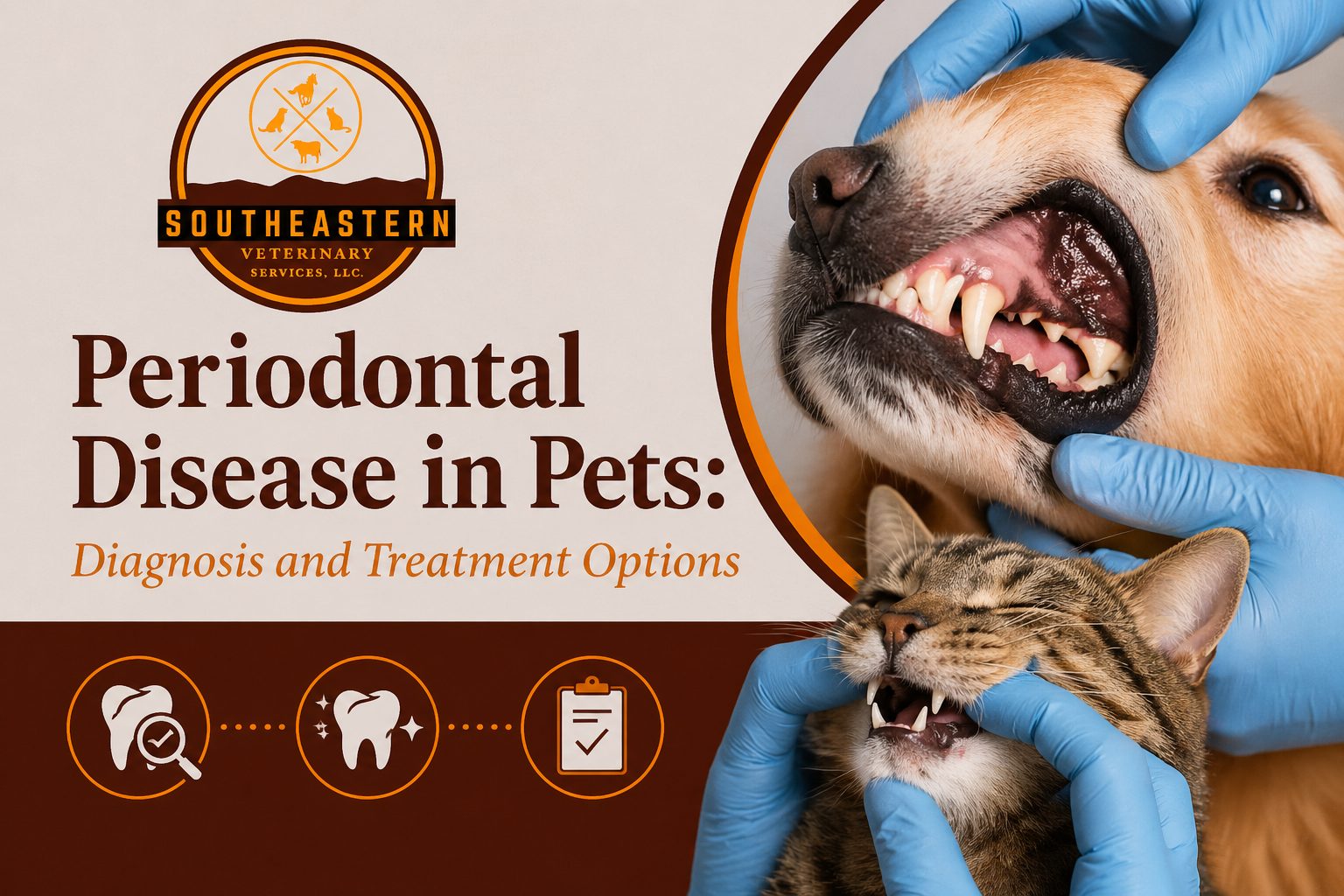
Periodontal disease is one of the most prevalent and underrecognized medical conditions affecting companion animals. By age three, most dogs and cats exhibit measurable signs of periodontal disease, yet many cases remain undiagnosed until advanced stages. Because the disease progresses silently and often without obvious pain behaviors, early detection and proper treatment are essential to preserving both oral and systemic health.
Understanding Periodontal Disease
Periodontal disease is a progressive inflammatory condition that affects the tissues supporting the teeth. It begins with plaque formation, a biofilm composed of bacteria, saliva, and food debris. If plaque is not mechanically removed, it mineralizes into tartar, which creates an ideal environment for bacterial proliferation.
As bacteria accumulate, inflammation develops in the gingiva. Without intervention, the infection spreads below the gumline, damaging periodontal ligaments, alveolar bone, and surrounding tissues. Over time, this results in tooth mobility, pain, and eventual tooth loss.
Stages of Periodontal Disease
Periodontal disease is classified into stages based on severity:
Stage 1: Gingivitis
Inflammation of the gums without bone loss. This stage is reversible with professional care and consistent home hygiene.
Stage 2: Early Periodontitis
Mild bone loss begins, often without obvious symptoms. Intervention can slow progression.
Stage 3: Moderate Periodontitis
Significant bone loss, gum recession, and tooth instability are present. Treatment becomes more complex.
Stage 4: Advanced Periodontitis
Severe bone destruction, chronic infection, and pain. Tooth extraction is often necessary to restore comfort.
Clinical Impact Beyond the Mouth
Periodontal disease is not confined to the oral cavity. Bacteria from infected gums can enter the bloodstream, contributing to systemic inflammation and organ damage. Research has linked untreated periodontal disease to conditions affecting the heart, kidneys, liver, and lungs.
Chronic oral infection increases the inflammatory burden and may exacerbate existing medical conditions, particularly in senior or immunocompromised patients.
Diagnostic Approach
Accurate diagnosis of periodontal disease requires a thorough and methodical clinical approach. Visual examination alone is insufficient, as most disease occurs below the gumline.
Comprehensive Oral Examination
A complete oral assessment is performed under general anesthesia to allow:
- Full visualization of all tooth surfaces
- Periodontal probing to measure pocket depth
- Evaluation of gingival attachment
- Assessment of tooth stability
Dental Radiography
Intraoral dental radiographs are critical for diagnosing periodontal disease. They reveal:
- Bone loss patterns
- Root pathology
- Abscess formation
- Tooth resorption
Radiographs often reveal significant disease not visible on external examination, informing appropriate treatment decisions.
Treatment Options
Treatment strategies depend on disease severity and overall patient health.
Professional Dental Cleaning
For early-stage disease, ultrasonic scaling above and below the gumline removes plaque and tartar. Polishing smooths tooth surfaces to slow bacterial reattachment.
Periodontal Therapy
Moderate disease may require:
- Subgingival curettage
- Root planing
- Local antimicrobial application
These procedures aim to reduce bacterial load and stabilize periodontal structures.
Tooth Extraction
In advanced cases, extraction of affected teeth is often the most humane option. Removing chronically infected teeth eliminates pain and prevents further systemic spread.
Adjunctive Therapies
Depending on patient needs, treatment plans may include:
- Antibiotic therapy
- Pain management
- Laser therapy for inflammation control
- Nutritional support
Role of Anesthesia and Safety
General anesthesia is essential for safe and effective dental treatment. It allows pain-free procedures, complete cleaning, and accurate diagnostics. Modern anesthetic protocols emphasize patient safety through pre-anesthetic screening, individualized drug selection, and continuous monitoring.
Prevention and Long-Term Management
Preventing periodontal disease requires a combination of professional care and consistent home maintenance. Effective prevention strategies include:
- Regular dental evaluations
- Scheduled professional cleanings
- Daily or routine tooth brushing
- Use of veterinary-approved dental products
Early intervention significantly reduces the need for advanced procedures and improves long-term outcomes.
Clinical Significance
Periodontal disease is a medical condition, not a cosmetic concern. Left untreated, it causes chronic pain, systemic illness, and diminished quality of life. Through proper diagnosis and evidence-based treatment, veterinary teams can dramatically improve patient comfort and overall health.