Warm weather can be enjoyable for families and pets, but high temperatures can also place dogs and cats at serious risk. Heat-related emergencies can happen quickly, especially during spring and summer in Tennessee, when humidity makes it harder for pets to cool themselves.
Unlike humans, dogs and cats do not sweat the same way. Dogs mainly release heat by panting, while cats may pant only when they are stressed, overheated, or experiencing a medical problem. When the body cannot cool itself quickly enough, a pet’s temperature can rise to dangerous levels, becoming a medical emergency.
For pet owners in Cleveland, TN, and surrounding areas, knowing how to prevent heat stress and recognize early warning signs can help protect companion animals during hot weather.
Why Heat Is Dangerous for Pets
Heat-related illness can affect the brain, heart, lungs, kidneys, digestive system, and blood clotting function. As a pet’s body temperature rises, normal body systems begin to struggle. Without prompt care, heat stress can progress into heatstroke, organ damage, collapse, or death.
Humidity increases the risk because panting becomes less effective when the air is already heavy with moisture. Pets can become overheated during walks, outdoor play, car rides, grooming, travel, or time spent in yards without enough shade and water.
Even pets that are normally active and healthy can overheat if they exercise too hard, stay outside too long, or cannot escape the heat.
Pets at Higher Risk
Any dog or cat can experience a heat-related emergency, but some pets are more vulnerable than others. Flat-faced breeds such as Bulldogs, Pugs, Boston Terriers, French Bulldogs, Persian cats, and Himalayan cats may have more difficulty moving air efficiently, which can make cooling harder.
Senior pets, puppies, kittens, overweight pets, and animals with heart disease, breathing problems, endocrine disease, or mobility issues may also be at increased risk. Thick-coated breeds and pets that are not used to outdoor activity may struggle in hot or humid conditions.
Pets recovering from illness or surgery should also be protected from heat because their bodies may already be under stress.
Common Causes of Heat-Related Emergencies
One of the most dangerous causes of heatstroke is being left inside a parked vehicle. Even with windows cracked, temperatures inside a car can rise very quickly and become life-threatening. Pets should never be left unattended in a vehicle during warm weather.
Other common causes include intense exercise, walking on hot pavement, being outdoors without shade, lack of clean drinking water, poor ventilation, and being confined in a garage, shed, carrier, or kennel without proper airflow.
Heat emergencies can also occur during travel, outdoor events, hiking, running, or playing fetch too long in the sun. Excited pets may continue to be active even when their bodies are overheating, so owners need to watch closely.
Warning Signs of Heat Stress
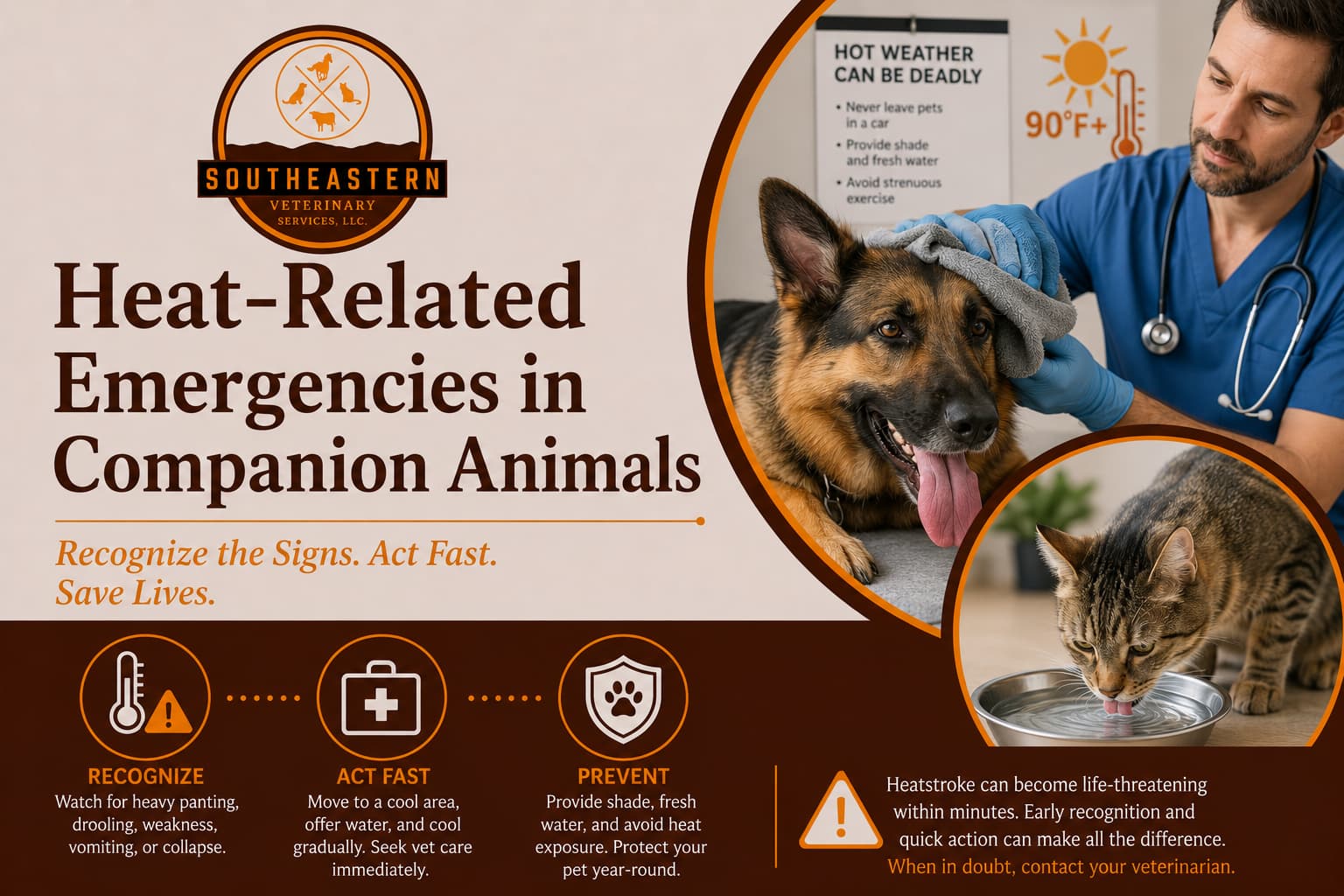
Early signs of heat stress may include heavy panting, drooling, restlessness, weakness, bright red gums, rapid heartbeat, and difficulty settling down. A dog may slow down on a walk, seek shade, lie down suddenly, or refuse to continue moving.
Cats may hide, breathe with an open mouth, drool, become weak, or seem unusually quiet. Open-mouth breathing in cats should always be taken seriously.
As overheating becomes more severe, signs may include vomiting, diarrhea, confusion, stumbling, collapse, seizures, pale or blue gums, bloody diarrhea, or loss of consciousness. These symptoms require immediate veterinary attention.
What To Do If Your Pet Is Overheating
If you suspect your pet is overheating, move them to a cooler area right away. Bring them indoors, into shade, or near a fan or air conditioning. Offer small amounts of cool water if your pet is alert and able to swallow normally.
You can begin cooling by applying cool, not ice-cold, water to the body, especially the neck, belly, paws, and inner thighs. Avoid using ice water because rapid cooling can cause blood vessels to constrict and may interfere with safe temperature reduction.
Do not force water into your pet’s mouth. If your pet is weak, vomiting, disoriented, collapsing, or having trouble breathing, seek emergency veterinary care immediately.
Even if your pet seems to improve after cooling, a veterinary exam is still important. Heat-related illness can cause internal damage that may not be obvious at first.
When To Seek Urgent Veterinary Care
Heatstroke is an emergency. Contact a veterinarian immediately if your pet has collapsed, is stumbling, has difficulty breathing, vomits repeatedly, has diarrhea, seems confused, has abnormal gum color, or cannot cool down.
Pets with severe heat exposure may need oxygen support, IV fluids, temperature monitoring, bloodwork, medication, and hospitalization. The sooner treatment begins, the better the chance of reducing serious complications.
Owners should not wait to see if severe symptoms pass on their own. Heat-related emergencies can worsen quickly.
How To Prevent Heat Emergencies
Prevention starts with planning around the weather. Walk dogs early in the morning or later in the evening when temperatures are cooler. Keep outdoor activity short during hot or humid days and allow frequent rest breaks.
Always provide fresh water and access to shade. Avoid walking pets on hot pavement, asphalt, or concrete, as these surfaces can burn paw pads and raise body temperature. A good rule is to place the back of your hand on the pavement. If it is too hot for your hand, it is too hot for your pet’s paws.
Never leave pets in parked vehicles, even for a few minutes. At home, make sure pets have a cool indoor space and proper ventilation. Outdoor pets should have reliable shade, clean water, and a way to escape direct sun.
Special Care for High-Risk Pets
Flat-faced breeds, senior pets, overweight pets, and animals with medical conditions need extra caution. These pets may need shorter walks, indoor exercise, cooling mats, air conditioning, and closer monitoring during warm months.
If your pet has a health condition, ask your veterinarian what level of activity is safe during hot weather. Some pets may need their routines adjusted during the summer to avoid unnecessary risk.
Grooming can also help some pets stay more comfortable, but shaving is not always the best choice for every coat type. A veterinary team can help you understand what is safe for your pet’s breed, skin, and coat.
Heat Safety for Cleveland, TN Pet Owners
Tennessee heat and humidity can be challenging for companion animals. Spring and summer activities should be planned with your pet’s safety in mind, especially as temperatures rise or storms make the air humid and heavy.
Southeastern Veterinary Services encourages pet owners to watch for early signs of overheating, limit activity during dangerous conditions, and act quickly if a pet appears distressed. A fast response can make a meaningful difference in a heat-related emergency.
Call to Action
If your pet is showing signs of heat stress or you are concerned about heat-related illness, contact Southeastern Veterinary Services in Cleveland, TN, right away. For routine care, schedule a wellness visit to discuss summer safety, breed-specific risks, and prevention tips to keep your pet healthy in warm weather.